
Yesterday, the federal government defended the constitutionality of a statute — 18 U.S.C. § 922(g)(3) — barring “unlawful users” of controlled substances from possessing firearms by citing local early American laws restricting the rights of “habitual drunkards.” You might ask if laws aimed at “drunkards” necessarily justify laws against mere users, whether such a distinction provides any predictable enforcement brightline, or, better yet, why we should even care about cherry-picked 18th century town ordinances.
Justice Neil Gorsuch, by contrast, reached directly for the Originalism hard stuff to point out that… the Founders went HARD.
“‘Habitual drunkard,’ the American Temperance Society back in the day said eight shots of whiskey a day only made you an ‘occasional drunkard,’” Gorsuch explained. “We have to remember the founding era, if you want to invoke the founding era, to be a ‘habitual drunkard,’ you had to do double that, okay?”
The Constitutional Convention was basically a frat party, okay? You can’t hammer out the details of a new nation without being absolutely hammered!
The gallery watching United States v. Hemani — the case of a Texas man who uses marijuana every other day while keeping an otherwise legally purchased handgun in his home — giggled at Gorsuch’s remarks, but the justice barreled forward with his humorless brand of originalism:
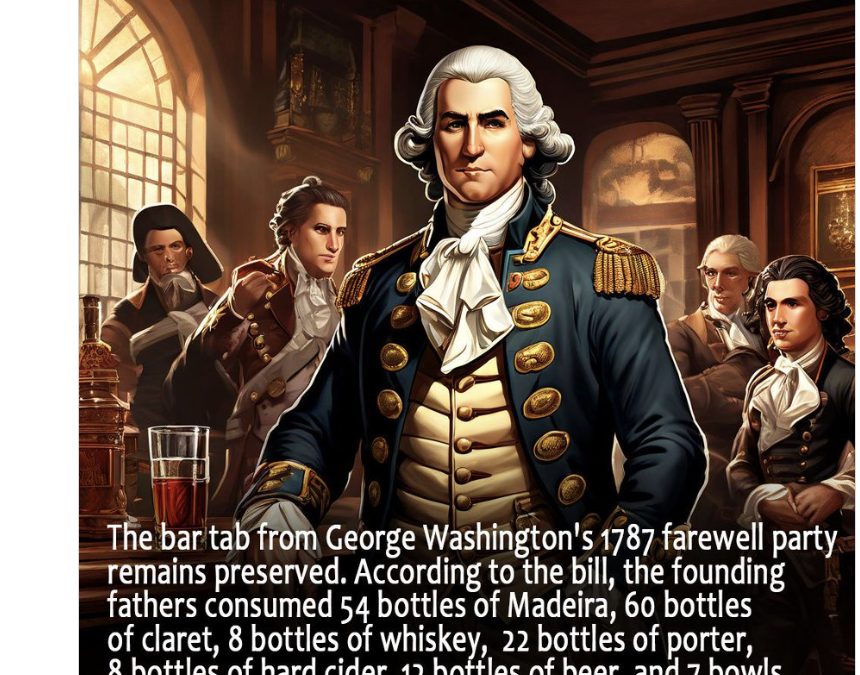
John Adams took a tankard of hard cider with his breakfast every day. James Madison reportedly drank a pint of whiskey every day. Thomas Jefferson said he wasn’t much a user of alcohol, he only had three or four glasses of wine a night, okay? Are they all habitual drunkards who would be properly disarmed for life under your theory?
All that and they built a new nation conceived in liberty? Talk about putting the fun in functional alcoholism. And they weren’t even the hardest of the hardcore Founders:
USA! USA! USA!
Justice Barrett questioned whether someone who takes Ambien or Xanax without a prescription becomes “dangerous” under this framework, noting that it’s the lawfulness of the use, not the drug itself, that triggers the statute. Justice Kagan went on a tangent about Ayahuasca — prompting Barrett to ask if it was a real drug. (It is.) Justice Thomas asked about anabolic steroids.
Which are all very valid questions about the troubling vagueness of this statute that probably should be struck down. None of which require asking if Ali Hemani could keep up with John Adams at bottomless cider brunch.
But this is the intellectual dead end wrought by the Court’s 2022 Bruen framework. Requiring the country’s gun regulations to match the “Nation’s historical tradition,” based on quasi-historical vibes might produce an occasional insight, but it also traps the Constitution in the sort of sophistic “how much pot would you have to smoke to lose a drinking contest with James Madison?” banter better suited to an actual barstool conversation.
This dogmatic adherence to historical analogy as the only acceptable framework for constitutional analysis spirals into absurdity.
When early American legislatures restricted the rights of habitual drunkards, they weren’t setting a blood alcohol threshold for future generations to reverse-engineer. They were articulating the principle that the government can act to protect public safety when substance use renders someone incapable of exercising responsible judgment. It translates perfectly well to the modern era without asking if the kids these days are too soft to hang at a John Hancock rager.
Comparative tolerance studies across centuries shouldn’t be the basis for interpreting fundamental rights. Bruen created the mess. Rahimi — the domestic abuser case — was the first attempt to clean it up without admitting it was a mess. Hemani is the next installment.
Joe Patrice is a senior editor at Above the Law and co-host of Thinking Like A Lawyer. Feel free to email any tips, questions, or comments. Follow him on Twitter or Bluesky if you’re interested in law, politics, and a healthy dose of college sports news. Joe also serves as a Managing Director at RPN Executive Search.
The post Justice Gorsuch: Originalism Means Remembering That The Founders Knew How To F-ing Party appeared first on Above the Law.